We are opening the first limited pre-orders for RASPIAUDIO Voice DSP+.
Voice DSP+ is not just a microphone array. It is a complete two-way voice
interface for AI assistants, robots, intercoms, conference devices, kiosks and
embedded products. It combines four digital microphones, real-time voice
processing, microphone and speaker audio, headphone routing and visual
direction feedback on one compact board.
Start in USB mode
The simplest way to use Voice DSP+ is to connect it directly by USB-C to a
Windows, macOS or Linux computer.
- Standard 48 kHz USB microphone and speaker
- Two processed microphone channels
- No product-specific driver to install
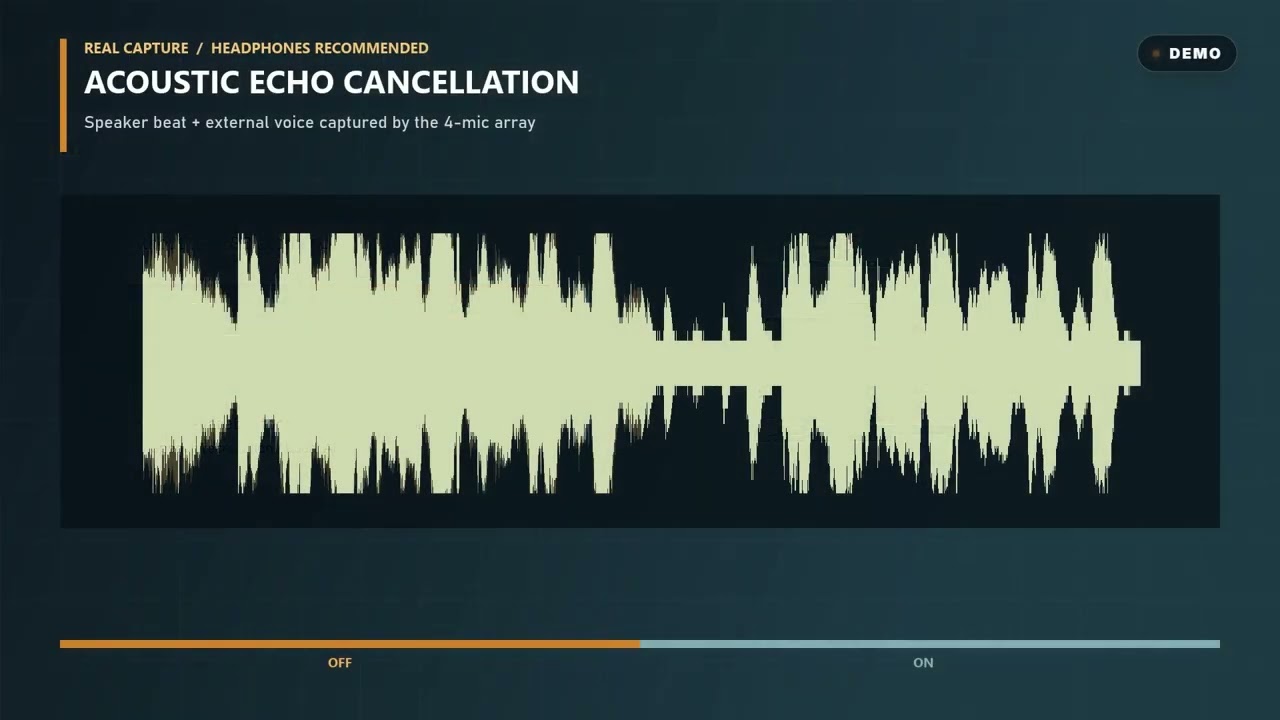
- Beamforming, acoustic echo cancellation, noise processing and automatic gain
control performed on the board - Firmware update or recovery directly from Chrome or Edge with the browser
updater
Select Voice DSP+ as the microphone and speaker in your voice AI application,
video-call software or audio project and start using it.
Go further with Raspberry Pi
For embedded applications, Voice DSP+ can be mounted on a Raspberry Pi through
the standard 40-pin connector. Raspberry Pi mode provides direct I2S audio,
SPI firmware boot and I2C control. The voice DSP handles the audio front end so
the Raspberry Pi remains available for the wake word, speech recognition, LLM,
text-to-speech and application logic.
The published Raspberry Pi setup includes a 16 kHz voice profile and a
far-field Hey Jarvis example. In that demonstration, the wake-word model runs
on the Raspberry Pi; the Voice DSP+ firmware provides beamforming and the
processed audio stream.
One board, two microphone geometries
Two detachable microphone bars carry two microphones each, for four
microphones in total. Install them in:
- SQUARE, for voices coming from around the product
- LINE, for users mainly positioned in front
The recommended firmware detects the installed geometry at cold boot and loads
the matching audio configuration.
Audio and interaction hardware
- Four digital microphones
- Real-time beamforming, AEC, noise processing and AGC
- Compact onboard speaker for prompts, speech and development
- Up to 11 W output for a suitable external 4-ohm or 8-ohm passive speaker
- Stereo 3.5 mm headphone output with automatic detection and speaker mute
- Optional 24-pixel WS2812B ring for direction-of-arrival display
- Onboard user button, including a hold-to-dictate function in the recommended
USB firmware
Included in the core kit
- 1 x Voice DSP+ main board
- 2 x detachable two-microphone boards, four microphones in total
- 1 x slim 3D-printed case
Open firmware and documentation
The firmware, Raspberry Pi installer, pinout, build instructions and technical
documentation are published on GitHub. The normal setup exposes only two clear
starting points: USB 48 kHz AUTO and Raspberry Pi 16 kHz AUTO. Diagnostic and
specialist firmware remains available in the Advanced section.
- Product and real audio demonstrations:
RASPIAUDIO Voice DSP+ – RASPIAUDIO - Open-source firmware and documentation:
GitHub - RASPIAUDIO/Voice-DSP-Plus: Four-microphone XMOS voice DSP with USB audio and Raspberry Pi I2S modes. · GitHub - Browser firmware updater:
Voice DSP+ Web Firmware Updater
Limited pre-order
The launch price is EUR 89.90, reduced from EUR 99.90.
This is a backorder and will not ship immediately. Estimated shipping starts
15 September 2026. The design is complete and working; the first production
quantity will be set from the pre-orders received in early August.
If you are building a voice assistant, robot, intercom, conference product or
another interactive audio device, tell us what integration or example you would
like us to document next.